Semi-Round vs Rectangular Trash Can: Which Is Better? (October 2026)
Choose a semi-round can for a flat-back wall fit, or a rectangular can for a straight-sided footprint and slightly smaller capacity. Your available floor space and preferred opening style matter more than shape alone.
On this page (6 sections)
Choose a semi-round can for a flat-back wall fit, or a rectangular can for a straight-sided footprint and slightly smaller capacity. In a semi-round vs rectangular trash can comparison, the best shape depends on your floor plan, preferred opening style and how much waste your kitchen produces.
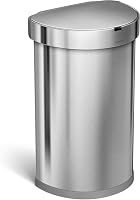
The simplehuman 60 L Semi-Round Step Can has a rounded front and flat back. The simplehuman 55 L Rectangular Step Can has a straight-sided shape, while the 45 L Semi-Round Sensor Can adds hands-free opening in a smaller capacity.
These options differ in more than outline. Check the size of the spot, how you want to open the lid and what liner system you prefer before choosing.

 Best for straight-sided placement
simplehuman 55 L Rectangular Step Can
Semi-round vs rectangular trash can: which shape fits a wall?
A semi-round can with a flat back is designed to sit against a wall, while a rectangular can offers straight sides. Measure the available width and depth instead of assuming either shape will fit every tight spot.
The 60 L semi-round step can measures 17.9 in long by 16.4 in wide by 26.4 in high. Its flat back can sit against a wall, and the rounded front changes the shape that extends into the room.
The 55 L rectangular step can measures 18.8 in long by 16.7 in wide by 26.4 in high. Those dimensions are close to the semi-round can's, so the rectangular outline doesn't automatically make it narrower or shallower.
Confirm which dimension will face the room in your intended placement. Also account for cabinet doors, drawers and the path people use to move through the kitchen.
Where does the rounded front help?
A rounded front can soften the outline of a can placed along a wall. That shape may suit an open stretch of wall where you want the back to sit close and the front to project smoothly into the room.
It won't fit flush between 2 straight walls or cabinets along its curved face. If the can needs to slide into a narrow gap, compare its full width and depth with the opening before deciding.
When does a rectangular shape make sense?
A rectangular can may suit a kitchen with straight cabinet edges or a designated rectangular space. Measure the area and compare the can's 18.8 in length and 16.7 in width with the layout.
The dimensions don't make it a guaranteed fit beside every cabinet. Allow working room around the lid and pedal, and check nearby doors and drawers through their full range of motion.
For other footprint choices, see our guide to narrow kitchen trash cans. If you're comparing broader kitchen options, our kitchen trash can guide explains how lid, size and bin needs shape the choice.
How much capacity do you need?
The 60 L semi-round step can holds 5 L more than the 55 L rectangular step can. The difference is modest, so base your choice on how often you empty the can and whether both sizes fit your kitchen.
The semi-round sensor can has a 45 L capacity, which is 15 L less than the larger semi-round step can. Its smaller capacity may work if you empty waste often or want hands-free opening more than a larger bin.
Capacity alone doesn't tell you how often a can will need emptying. Food scraps, packaging and the number of people using it can change how quickly space fills.
If you're deciding whether a larger can is worth the floor space, our guide to kitchen trash can sizes can help you estimate your household's needs. For a familiar capacity reference, see how big a 13 gallon trash can is.
Which opening style fits your routine?
Choose a step can if you want to open the lid with a foot pedal; choose the sensor model if you want it to open with a hand wave. Shape and opening method are separate decisions.
Both step cans use a pedal and Lid Shox motion control for a slow, quiet close. The 55 L rectangular can also keeps its lid open hands-free for longer chores such as meal prep and unloading groceries.
The 45 L semi-round sensor can uses a motion sensor to open automatically. Its outer lid lifts for access to the liner, then closes over the liner to keep it out of sight.
A sensor can has no pedal to press, but it needs the sensor area above and in front to suit your placement and routine. If you prefer a pedal, compare more options in our guide to kitchen trash cans with a foot pedal.
Is the 45 L semi-round sensor can a better fit?
The sensor can may suit you if you want to open the lid without touching it and don't need the capacity of either step can. It measures 15.4 in long by 12.8 in wide by 25.2 in high.
Its narrower dimensions may help where a larger can won't fit, but check the space in person with a tape measure. Sensor placement, access to the opening and room to stand all matter.
For a closer look at the model, read our simplehuman 45 L Semi-Round Sensor Can review. If you're comparing sensor cans across styles, see our hands-free kitchen trash can guide.
How do the liner systems compare?
Both step cans use a liner rim that grips and hides the bag, while the rectangular step can also has a liner pocket. The sensor can has a liner pocket too, so it provides the same basic storage convenience in a different opening style.
The 60 L semi-round step can uses Code P custom-fit liners. Its liner pocket stores a 20-pack inside the can, and its rim grips the liner directly without an inner bucket.
The 55 L rectangular step can uses Code Q custom-fit liners. Its liner pocket stores and dispenses liners one by one, and the rim keeps the bag gripped and out of sight.
The 45 L semi-round sensor can has a liner pocket that dispenses liners one by one. Its liner rim lifts for access and closes to hold the liner in place.
Check liner compatibility before you buy replacement bags. The different codes mean you shouldn't assume that a liner made for one of these cans will fit another.
For help choosing a bag size, see our guide to kitchen trash can bag sizes. If you're curious why some kitchen cans cost more, our article on why some kitchen trash cans cost so much looks at features such as liner systems.
What should you measure before choosing?
Measure the floor space, the route to the can and the room needed to use it. A can that fits against a wall can still block a cabinet door or squeeze a walkway.
Measure the available width and depth at floor level. Then check height under any shelf or counter that overhangs the spot.
Mark the footprint on the floor with painter's tape. Open nearby doors and drawers, then stand where you would normally use the can to see whether the placement feels workable.
Check how waste reaches the can during meal prep. A spot that forces you to walk around an open dishwasher or step across a busy path can become inconvenient regardless of shape.
If your best location is inside a cabinet, neither freestanding step can may be the right choice. Our under-sink and pull-out can guide covers options designed for cabinet storage.
Which simplehuman shape should you choose?
Choose the 60 L semi-round step can for its flat back and larger capacity, the 55 L rectangular step can for straight sides and a liner pocket, or the 45 L semi-round sensor can for hands-free opening in a smaller size. Measure the spot and choose the opening style you will use comfortably.
The two step cans are close in their listed dimensions, but their outlines and liner codes differ. A semi-round label by itself doesn't prove that a can takes less floor space.
If you want the simplehuman semi-round shape with a pedal, start with the 60 L model. If you prefer hands-free opening, compare the sensor model's smaller capacity and sensor placement with your daily routine.
If you're still weighing the two pedal options, our simplehuman 50 Liter Rectangular Step Can review covers another rectangular model. For a broader look at foot-pedal choices, return to our pedal-can guide.
Frequently asked questions
Is a semi-round or rectangular trash can better for a kitchen?
A semi-round can with a flat back suits placement against a wall, while a rectangular can may suit a floor plan built around straight edges. Compare the can's actual dimensions with nearby cabinets and walkways; shape labels alone don't show how much room you'll have to open and use it.
Does a semi-round trash can save space?
A flat back can sit against a wall, and a rounded front softens the footprint. That doesn't guarantee it takes less floor space than a rectangular can, so measure the width and depth where it will stand and leave enough room for regular use.
What is the difference between the 60 L and 55 L simplehuman step cans?
The 60 L model is semi-round with a flat back, while the 55 L model is rectangular. Both use a step pedal and liner rim, but the rectangular can has a liner pocket that stores and dispenses liners from inside.
Is a semi-round sensor can the same as a semi-round step can?
No. The 45 L semi-round sensor can opens automatically with a hand wave, while the 60 L semi-round step can opens with a foot pedal.
Choose by opening style as well as shape and capacity.