Pull-Out vs Freestanding Trash Can: Which Fits Better? (October 2026)
Choose a pull-out trash can to hide waste in a cabinet; choose a freestanding can for larger capacity and simpler placement. Measure the cabinet opening and floor space before deciding.
On this page (8 sections)
- Pull-out vs freestanding trash can: which fits your kitchen?
- Is a pull-out kitchen trash can right for you?
- When is a freestanding trash can the better choice?
- Which style is easier to use day to day?
- Which option is easier to clean and maintain?
- What should you measure before choosing?
- Which trash can should you choose?
- How we scored these options
Choose a pull-out trash can to keep waste hidden inside a cabinet; choose a freestanding can for easier placement and more capacity. The right setup depends on the cabinet space you can spare, the floor area available and whether you need separate bins.
A pull-out kitchen trash can slides out when you need it and tucks away after. A freestanding can stays accessible on the floor, so you don't need to install a frame inside a cabinet.
The products below show the trade-offs: one 30 L pull-out, one larger 50 L step can and a double-bin pullout for sorting waste and recycling.
 Best for a hidden single bin
simplehuman 30 L Under-Counter Pull-Out Can
 Best for a larger freestanding bin
simplehuman 50 L Rectangular Step Can
Pull-out vs freestanding trash can: which fits your kitchen?
A pull-out fits kitchens with a suitable cabinet; a freestanding can fits kitchens with a usable floor spot. Measure both locations before choosing a style.
A cabinet can hide waste and keep the floor clear, but the bin uses storage space that might otherwise hold cookware or cleaning supplies. A freestanding can needs room outside the cabinets, but you can move it without changing the cabinet layout.
Check doors and drawers around either location. Leave enough room for the cabinet door or pull-out to travel fully, and make sure a freestanding can's lid and pedal can open without hitting a wall or appliance.
For cabinet measurements and clearance, use this guide to trash can sizes that fit inside a kitchen cabinet. It helps you compare the opening with the space behind it.
Is a pull-out kitchen trash can right for you?
Pick a pull-out if you want the bin concealed and can give up cabinet space. This setup works best when the cabinet is near the area where you prep food and clear dishes.
A pull-out can keeps the bin out of sight between uses. The simplehuman 30 L Under-Counter Pull-Out Can has a steel frame, ball-bearing tracks and a chromed handle.
A pull-out also asks more of your cabinet. Confirm the frame can mount securely and that pipes, shelves or hinges won't block it.
When does a single pull-out make sense?
A single pull-out suits households that use one main waste bin and want a clear floor. The 30 L capacity is smaller than the 50 L freestanding option, so consider how often you want to empty it.
Choose it when the cabinet has enough room and the path from the prep area to the cabinet is convenient. If you need a larger bin, compare the capacity with your usual bag size and how quickly your household fills it.
If you want to add a pull-out to an existing cabinet, see how to add a pull-out trash can. That guide covers the cabinet and installation choices to consider.
Can a pull-out hold recycling too?
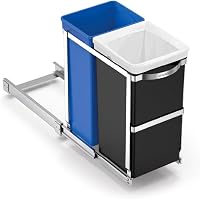
A double pullout can separate trash and recycling in 2 containers. It needs more cabinet width and depth than a single-bin setup, so measure the opening and hinge clearance carefully.
The Rev-A-Shelf 35 Qt Double Pullout includes 2 containers and a metal frame. Its minimum cabinet opening is 14.5 inches wide, 21.75 inches deep and 19.25 inches high.
The system mounts to the cabinet floor with the included hardware. Door-mount brackets are sold separately if you want to attach the frame to the cabinet door.
For more setups with a dedicated recycling bin, compare kitchen trash cans with recycling. A double cabinet system may suit you better if you want both containers concealed.
When is a freestanding trash can the better choice?
Choose a freestanding can if you want a larger bin or don't want to install one inside a cabinet. It uses floor space, but its placement is easy to adjust.
The simplehuman 50 L Rectangular Step Can has a pedal, a stay-open lid and a removable inner bucket. Its built-in wheels help you move it when cleaning or changing a bag.
This can measures 19.8 inches long, 12.8 inches wide and 25.7 inches high. Check the floor area and lid clearance before placing it beside a counter, island or wall.
Compare other under-sink and pull-out trash can options if you're still weighing concealed storage against easy access. That guide can help narrow the choice by cabinet layout and bin type.
Which style is easier to use day to day?
A freestanding can is easier to reach quickly; a pull-out keeps the bin out of sight when you're done. Your routine matters as much as the can's capacity.
A freestanding pedal can lets you open the lid while holding scraps or packaging. The 50 L step can's lid can stay open for longer chores, and its inner bucket lifts out for bag changes and cleaning.
A pull-out requires opening the cabinet and sliding out the frame each time. Its handle provides a direct grip, but a nearby cabinet door or drawer can interrupt access if the placement is awkward.
Try the motions before you commit: stand where you'd prepare food, open the cabinet or step-can lid, and check whether you can reach the bin without turning or shifting other items.
Which option is easier to clean and maintain?
A freestanding can is simpler to move for floor cleaning; a pull-out needs a clear cabinet track and interior. Both need regular bag changes and cleaning.
With the freestanding step can, the removable inner bucket can be lifted out for cleaning. Built-in wheels help reposition the can, though you'll still want to keep its floor area easy to reach.
A pull-out frame stays inside the cabinet, where crumbs or spills can collect around the bin. Keep the cabinet floor clear enough to remove the bin and wipe around the tracks.
For either style, choose a bag that fits the bin and won't slip down during use. The guide to kitchen trash bag sizes explains how to match a bag to your can.
What should you measure before choosing?
Measure the full cabinet or floor space, including the room needed to open and use the can. A cabinet opening alone may not reveal a pipe, hinge or shelf that blocks a pull-out.
For a cabinet system, record the clear opening width, usable depth and height, plus the position of hinges, plumbing and stored items. The Rev-A-Shelf double pullout needs at least 14.5 inches of opening width, 21.75 inches of depth and 19.25 inches of height.
For a freestanding can, measure its footprint and the space above the lid. Check nearby doors, drawers and walkways so the can doesn't block regular kitchen traffic.
If capacity is your main question, start with what size trash can a kitchen needs. A size guide can help you avoid choosing a cabinet style that empties too often or a floor can that takes up more space than you can spare.
Which trash can should you choose?
Pick a pull-out for hidden storage, a double pullout for separated waste and recycling, or a freestanding can for larger capacity and flexible placement. Let your measurements and daily routine decide.
Choose the simplehuman 30 L pull-out when you have a suitable cabinet and want one concealed bin. Choose the Rev-A-Shelf double pullout when you want 2 containers and your cabinet meets its minimum opening dimensions.
Choose the simplehuman 50 L step can when you want more capacity and have floor space for a pedal-operated bin. For a broader comparison of kitchen styles, see our kitchen trash can picks.
How we scored these options
Our score weighs specs and features against what you're shopping for. The 30 L pull-out scores 8.4 for concealed storage, the 50 L step can scores 9.1 for capacity and flexible placement, and the 35 Qt double pullout scores 8.3 for cabinet-based waste sorting.
Pull-out vs freestanding trash can: quick comparison
| Product | Best for | Capacity | Installation | Opening | Our score |
|---|---|---|---|---|---|
| simplehuman 30 L Under-Counter Pull-Out Can | a hidden single bin | 30 L | Mounts inside a base cabinet | Pull-out drawer | 8.4 |
| simplehuman 50 L Rectangular Step Can | a larger freestanding bin | 50 L | Step-on pedal | 9.1 | |
| Rev-A-Shelf 35 Qt Double Pullout | separating waste and recycling | Two 35 qt bins | Pull-out frame | 8.3 |
The best pull-out vs freestanding trash can choice is the one that fits the space and routine you have. Measure the cabinet for a pull-out, or reserve a clear floor spot for a freestanding can with the capacity you need.
Frequently asked questions
Is a pull-out trash can better than a freestanding one?
A pull-out is better if hiding the bin matters and you have a cabinet that fits it. A freestanding can is easier to place without installation and can offer more capacity, such as the 50 L step can compared with the 30 L under-counter can.
How do I know if a pull-out trash can will fit my cabinet?
Measure the cabinet opening, interior width, depth and height, then account for hinges and nearby plumbing. The Rev-A-Shelf double pullout needs an opening at least 14.5 inches wide, 21.75 inches deep and 19.25 inches high, plus suitable hinge clearance.
Can a pull-out trash can also hold recycling?
Yes. A double pullout gives you 2 containers, so you can use one for kitchen waste and the other for recycling.
Check that the full frame fits your cabinet and that both bins can slide out without hitting hinges or stored items.
What should I choose for a small kitchen?
Choose a pull-out if a suitable cabinet can spare the interior space, since it keeps the bin off the floor. Choose a freestanding can if cabinet storage is more valuable or the opening is too small; measure the floor spot and the can before placing it.